 info@meftinternational.net
  March 24, 2026
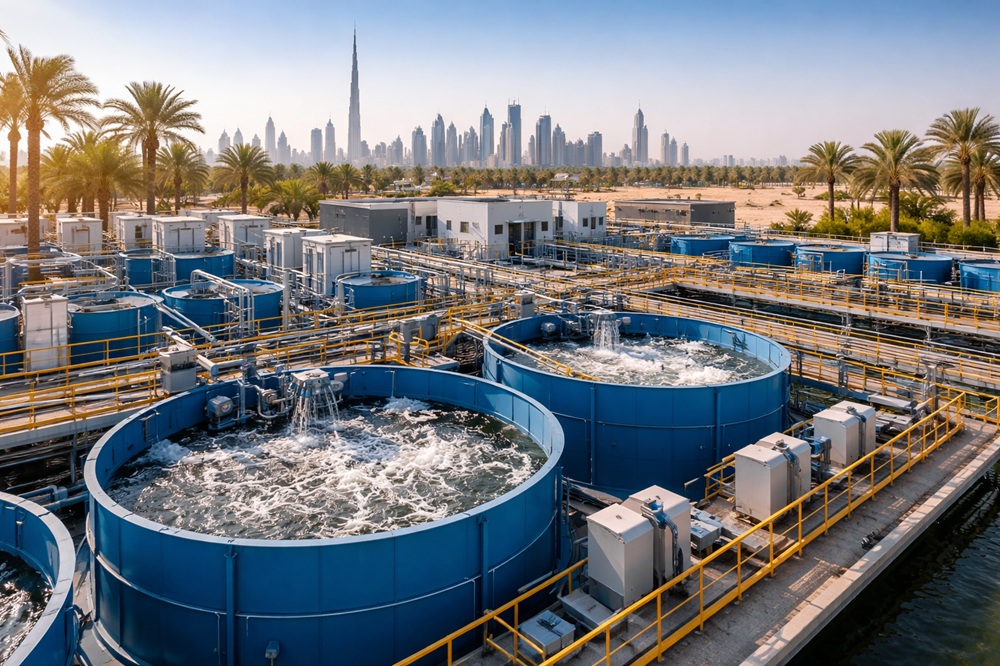
As urban development, hospitality projects, and industrial facilities continue to expand across the Middle East—particularly in the United Arab Emirates and Saudi Arabia—the demand for efficient and space-saving wastewater treatment solutions has grown rapidly.
High temperatures, limited land availability, and increasingly strict environmental regulations mean that selecting the right sewage treatment technology is now a critical decision for project owners and operators.
One solution that has gained strong adoption across the region is the MBBR STP plant. Known for its compact footprint, stable biological performance, and operational flexibility, the Moving Bed Biofilm Reactor (MBBR) system is widely used for modern sewage treatment applications.
In simple terms
An MBBR STP plant is a sewage treatment system that uses moving bio-media to grow microorganisms, allowing wastewater to be treated efficiently in a compact and stable process.
An MBBR STP plant is a biological sewage treatment system that uses specially designed floating media to support the growth of microorganisms that break down organic pollutants in wastewater.
Unlike traditional systems that rely only on suspended bacteria, the MBBR process allows microorganisms to attach to carrier media that move freely inside the reactor tank. This significantly increases the active surface area available for treatment.
As a result, the system delivers consistent performance even when wastewater flow or quality changes.
The treatment process in an MBBR system follows a continuous and stable flow.
First, incoming sewage passes through pre-treatment, such as screening, to remove large solids. The wastewater then enters the MBBR reactor, where bio-media carriers are kept in motion using aeration.
Oxygen supplied through the aeration system enables microorganisms on the media surface to break down organic matter efficiently.
After biological treatment, the water flows into a clarification stage. Here, solids are separated from the treated water. The treated effluent can then be discharged safely or further polished for reuse applications.
An MBBR system consists of several components that work together to ensure reliable treatment.
The reactor tank provides the environment for biological treatment, while the bio-media offers a large surface area for microbial growth. The aeration system supplies oxygen and keeps the media moving uniformly.
A clarifier separates treated water from sludge. Control panels and automation systems regulate airflow, process timing, and overall operation. Sludge handling arrangements manage excess biological solids generated during treatment.
The quality and integration of these components directly influence system efficiency and maintenance requirements.
One of the key advantages of MBBR technology is its flexibility across a wide range of capacities.
Small-scale systems are commonly used for villas, staff accommodations, and small commercial buildings. These installations are compact and easy to integrate into limited spaces.
Medium-scale plants serve hotels, resorts, labor camps, and residential buildings. In these environments, MBBR systems perform well under fluctuating daily loads.
Large-scale installations are designed for industrial facilities, residential communities, and infrastructure projects. Capacity is typically calculated in cubic meters per day (CMD), with allowance for peak loads and future expansion.
The cost of an MBBR STP plant depends on several project-specific factors rather than a fixed price.
Key cost drivers include treatment capacity, influent wastewater quality, system automation level, and whether the plant is packaged or constructed using civil works. Requirements for treated water reuse, installation scope, and commissioning complexity also affect overall investment.
For most projects, evaluating lifecycle cost is more important than focusing only on initial capital expenditure.
MBBR systems are commonly delivered as either packaged units or conventional civil-based installations.
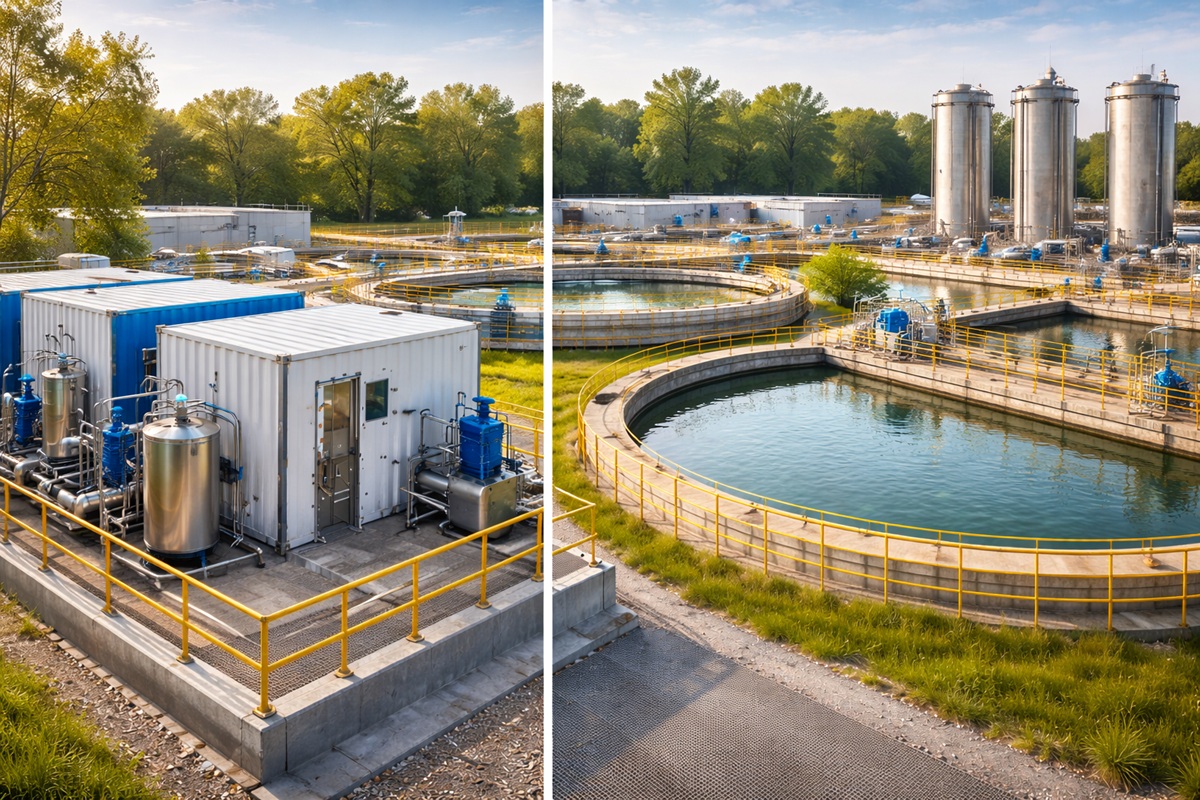
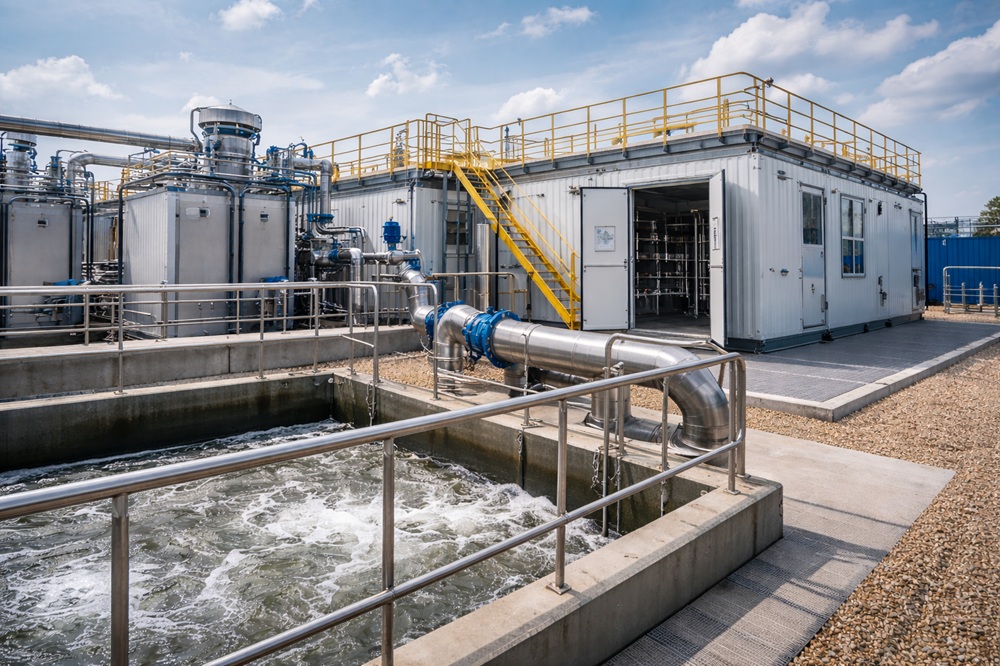
Packaged systems are factory-assembled, compact, and faster to install. They are well-suited for fast-track projects and sites with limited space.
Civil-based installations are built on site and offer greater layout flexibility. These are typically selected for very large treatment capacities or long-term infrastructure projects.
The right choice depends on site conditions, timelines, and future expansion plans.
MBBR technology is widely used across the Middle East, including projects in the UAE, Saudi Arabia, and other GCC countries.
Common applications include residential developments, hotels and hospitality projects, commercial buildings, labor accommodations, industrial facilities, and remote or decentralized sites.
The system’s ability to perform reliably in hot climates makes it particularly suitable for regional conditions.
Several characteristics make MBBR systems a strong fit for Middle East projects.
Their compact design reduces land requirements, while high biological efficiency ensures stable treatment even under variable loads. The process remains reliable at elevated temperatures, which is a critical advantage in arid environments.
In addition, MBBR systems are scalable and can be designed to meet local discharge and treated sewage effluent (TSE) reuse standards.
MBBR STP plants are generally easy to operate compared to many other biological treatment systems.
Operators focus on monitoring aeration performance, ensuring proper media movement, and managing sludge removal. Routine inspection of blowers, diffusers, and control systems helps maintain stable operation.
The bio-media used in MBBR systems has a long service life and does not require frequent replacement, which reduces maintenance effort.
Several issues can affect long-term performance if not addressed early.
These include undersizing the system, ignoring influent wastewater quality, using low-quality media, and failing to plan for future capacity increases. Overlooking operation and maintenance requirements can also lead to avoidable performance problems.
Proper planning and supplier evaluation significantly reduce these risks.
When compared with conventional activated sludge systems, MBBR requires less space and offers greater stability under load variations.
Compared with sequencing batch reactors (SBR), MBBR provides continuous treatment rather than batch operation. While membrane bioreactors (MBR) can achieve higher effluent quality, MBBR systems are typically simpler to operate and maintain.
Each technology has its place, but MBBR is often selected where simplicity and space efficiency are priorities.
In countries such as the UAE and Saudi Arabia, MBBR STP plants can be designed to meet local discharge regulations and treated sewage effluent reuse requirements.
Treated water is commonly reused for landscape irrigation, flushing, and other non-potable applications, reducing demand on freshwater resources.
An MBBR STP plant is a practical wastewater treatment solution for Middle East projects where space efficiency, performance stability, and regulatory compliance are critical.
By understanding capacity requirements, cost drivers, and application needs, decision-makers can assess whether an MBBR-based solution aligns with their project goals. When properly designed and maintained, these systems support sustainable development and long-term water management across the region.
The main advantage of MBBR technology is its compact design combined with stable biological performance. It allows wastewater to be treated efficiently while requiring less space than many conventional systems.
Yes. MBBR systems perform reliably in high-temperature environments, making them well-suited for Middle East conditions, including the UAE and Saudi Arabia.
Treated water from an MBBR-based sewage treatment system can be reused for non-potable applications such as irrigation, flushing, and cooling, when designed to meet reuse standards.
MBBR systems require routine monitoring of aeration, media movement, and sludge removal. The bio-media used has a long service life and does not need frequent replacement.
Capacity selection depends on daily wastewater flow, peak loading, influent quality, and future expansion plans. Proper assessment during the design stage is essential.
Selecting the right wastewater treatment system requires a clear understanding of site conditions, regulatory requirements, and long-term operational needs.
If you are planning a residential, hospitality, or industrial project in the Middle East, speaking with experienced water treatment professionals can help you determine whether an MBBR STP plant is the right fit for your application.
Explore our packaged water treatment solutions or get in touch to discuss your project requirements.
info@meftinternational.net March 24, 2026
info@meftinternational.net March 12, 2026
info@meftinternational.net February 26, 2026
info@meftinternational.net February 19, 2026
info@meftinternational.net February 12, 2026
info@meftinternational.net January 30, 2026
info@meftinternational.net January 20, 2026
info@meftinternational.net December 31, 2025