 info@meftinternational.net
  June 24, 2026
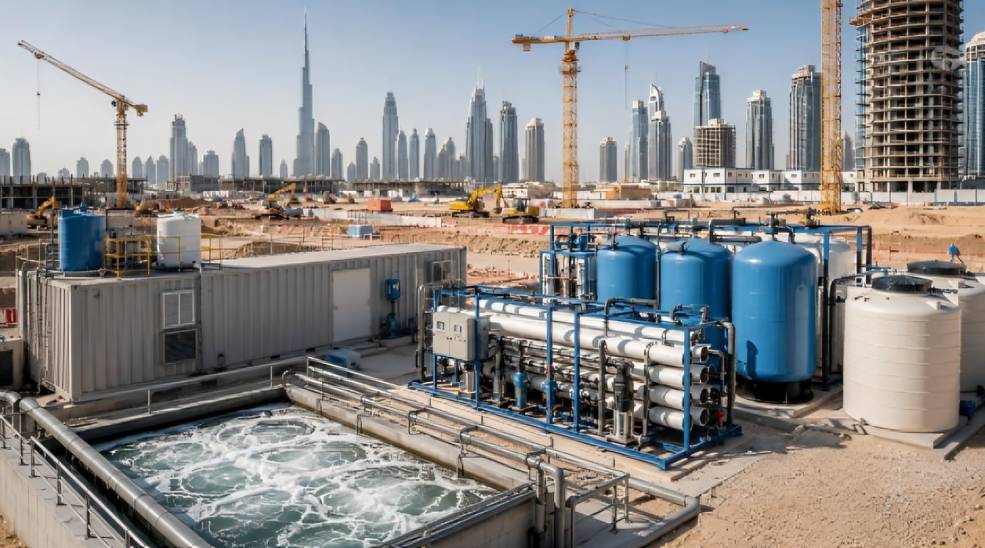
Dubai continues to lead the Middle East in infrastructure development, with large-scale residential towers, commercial complexes, industrial facilities, and mega projects reshaping the city every year. However, as construction activity increases, the demand for efficient water management systems also rises rapidly.
Construction sites generate significant amounts of wastewater from labour camps, excavation activities, equipment cleaning, and daily operations. At the same time, Dubai’s sustainability initiatives and environmental regulations require developers to manage water responsibly and reduce unnecessary freshwater consumption.
As a result, construction wastewater treatment UAE solutions have become a critical part of modern project planning. From sewage treatment plants and dewatering systems to water reuse technologies, developers must implement reliable treatment systems to ensure compliance, operational efficiency, and environmental sustainability.
In this guide, we explain the key water treatment Dubai construction requirements, the systems commonly used, regulatory considerations, and best practices that help construction projects operate efficiently across the UAE.
To begin with, modern construction projects require more than basic water supply and drainage systems. Developers must manage wastewater effectively, reduce environmental impact, and support water reuse wherever possible.
Typically, construction projects in Dubai use:
These systems help construction companies:
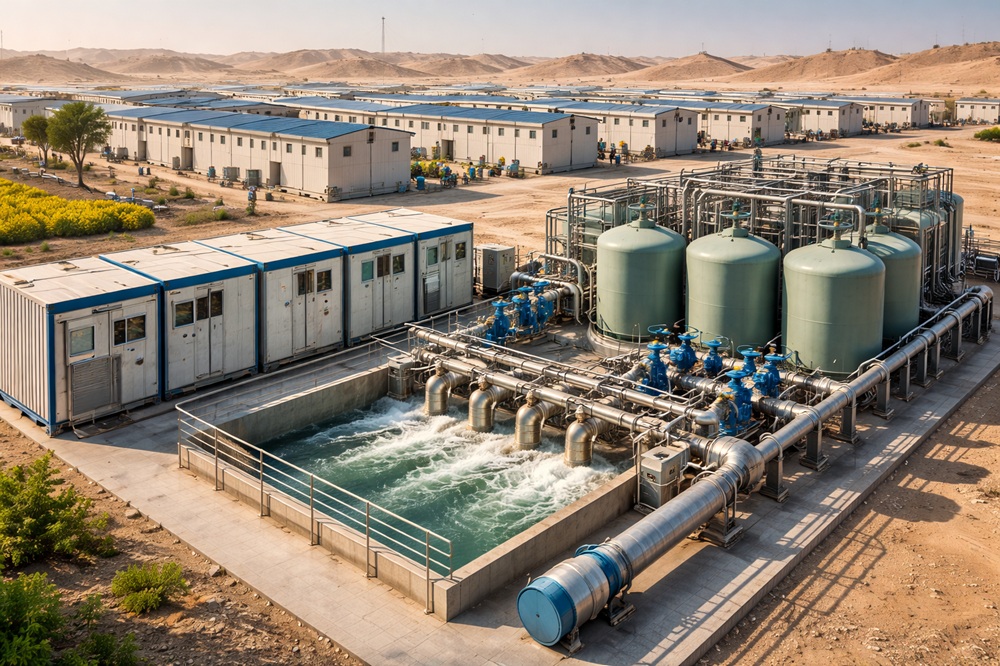
Moreover, many projects now use modular and containerized treatment systems because they offer faster deployment and greater flexibility.
Dubai Municipality and environmental authorities enforce strict wastewater discharge standards. Therefore, construction companies must ensure that all treatment systems comply with approved regulations.
Otherwise, projects may face delays, environmental penalties, or operational restrictions.
The UAE has limited freshwater resources. Consequently, water conservation remains a major national priority.
Dubai’s sustainability initiatives encourage developers to reuse treated water for:
As a result, efficient construction wastewater treatment UAE systems help projects reduce environmental impact while supporting long-term sustainability goals.
Most large construction projects include labour camps or temporary staff accommodations. Naturally, these facilities generate significant amounts of wastewater daily from:
Without proper treatment systems, wastewater can create hygiene issues and environmental concerns.
Properly designed STP plants for labour camps help construction projects maintain compliance and improve worker living conditions.
Dubai’s dry climate creates considerable dust during excavation and construction activities. Therefore, construction sites require large volumes of water for dust control and operational activities.
Instead of relying entirely on freshwater, many projects now reuse treated water onsite. Consequently, this approach reduces both operating costs and water consumption.
Different construction projects require different treatment solutions depending on site conditions, workforce size, and operational requirements.
Labour camps require reliable sewage treatment systems to maintain hygiene and environmental compliance.
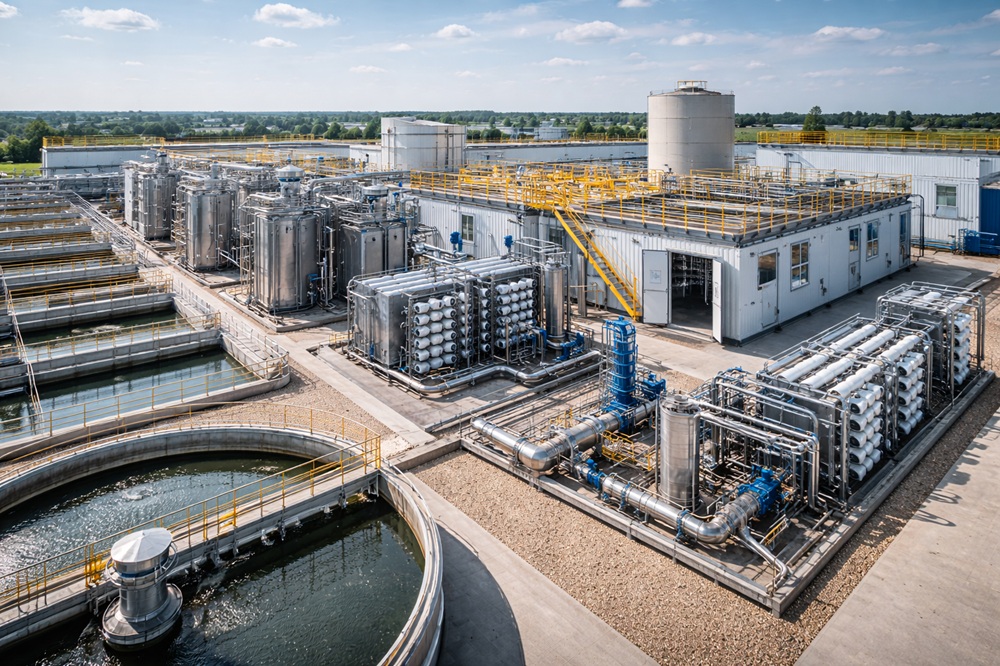
An STP treats wastewater generated from worker accommodations and makes it safe for discharge or reuse.
Common technologies include:
Additionally, modern STP systems support water reuse applications such as irrigation and dust suppression.
Learn more about STP plants for labour camps in Saudi Arabia and UAE projects.
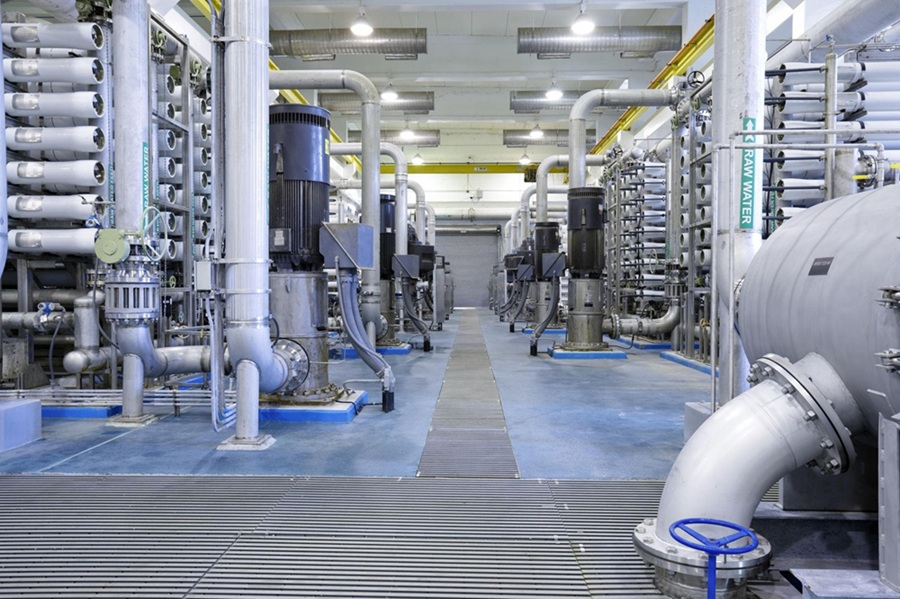
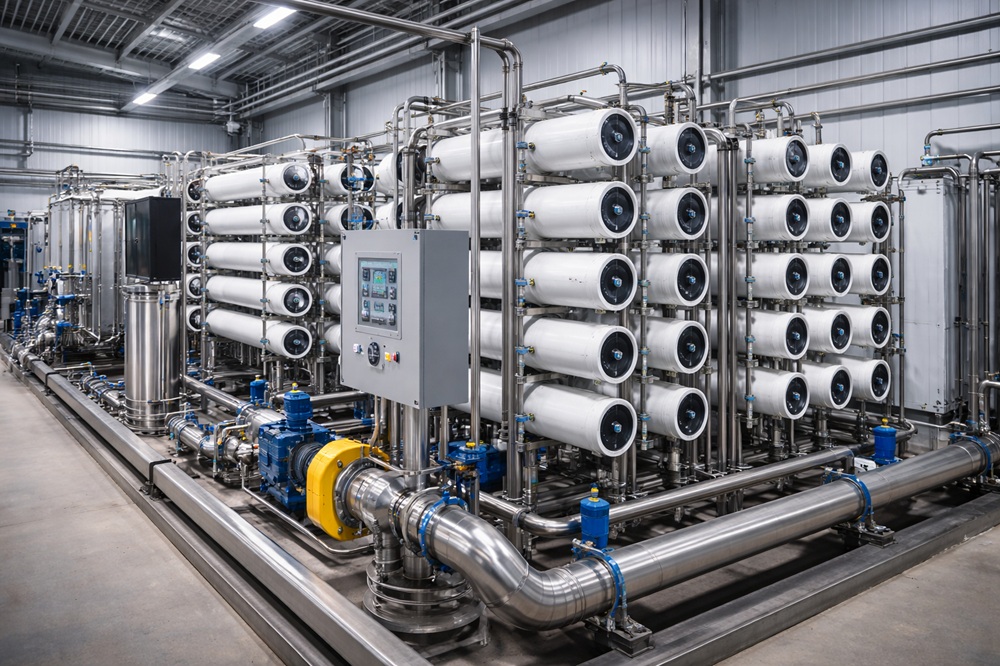
Many construction projects require treated water for drinking, equipment operation, or industrial applications. Therefore, RO systems remove dissolved salts and contaminants from water sources.
RO systems are especially useful when projects rely on:
Furthermore, advanced RO systems help improve water quality while reducing equipment scaling and operational issues.
Explore advanced reverse osmosis RO plant solutions for construction and industrial applications.
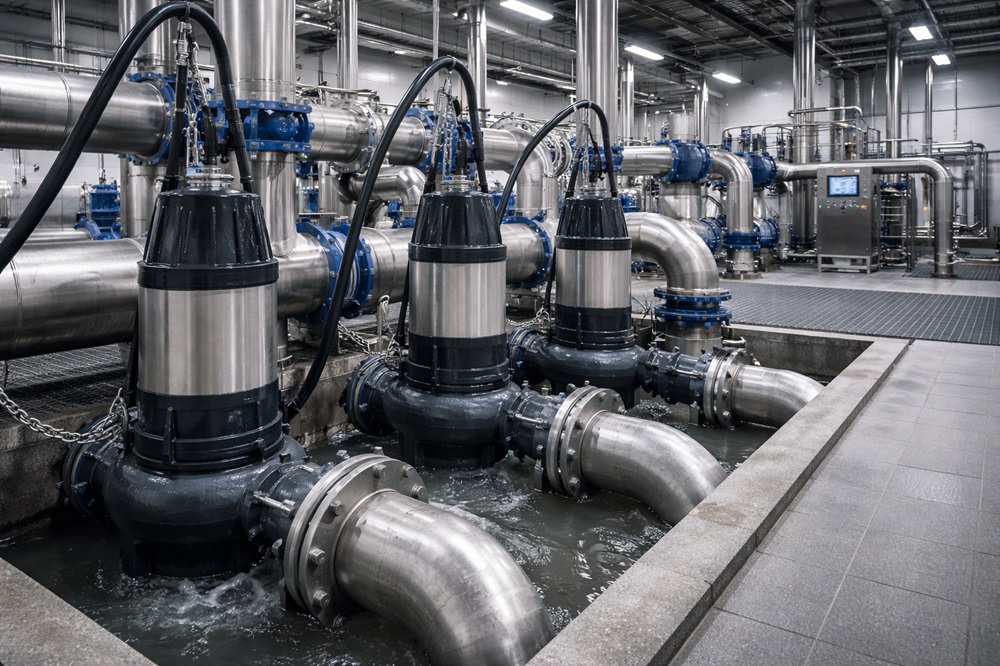
Excavation and foundation works frequently generate groundwater that must be removed before construction can continue.
However, this groundwater may contain:
Therefore, dewatering treatment systems clean the water before discharge or reuse, ensuring compliance with environmental standards.
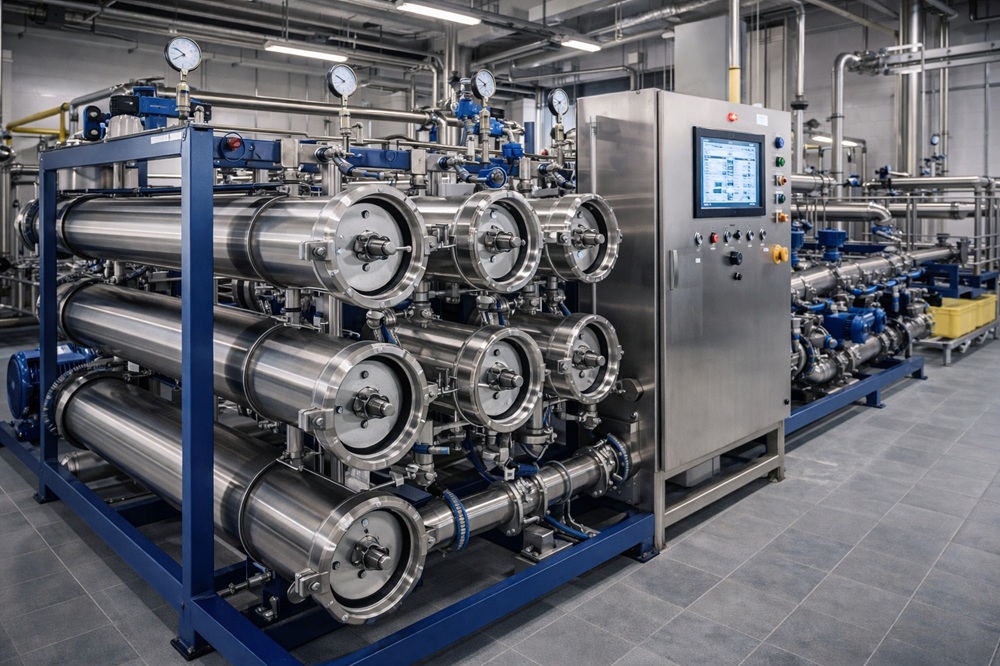
Chemical dosing systems improve treatment performance by controlling water chemistry throughout the process.
These systems are commonly used for:
As a result, they improve operational efficiency and protect water treatment equipment from damage.
Discover how chemical dosing systems improve industrial and construction water treatment performance.
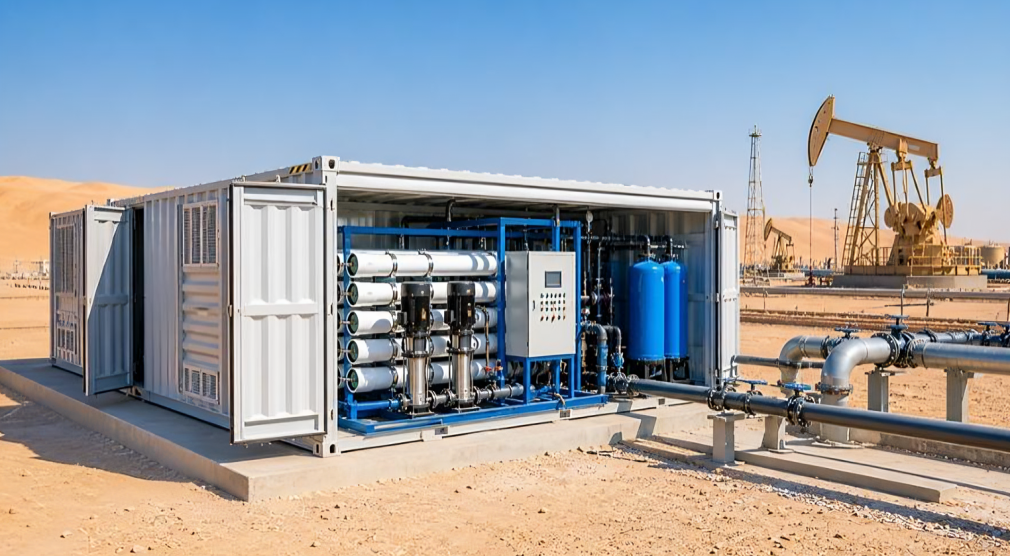
Many construction companies prefer packaged treatment systems because they are compact, modular, and quick to install.
Packaged treatment plants are ideal for:
In addition, these systems can often be relocated when project requirements change.
Learn more about packaged treatment plants for temporary and remote project applications.
Construction projects face several water-related challenges that require specialized treatment solutions.
Excavation activities often encounter groundwater with high salinity and suspended solids. Without proper treatment, this water may fail to meet discharge standards.
Consequently, developers frequently install RO and dewatering treatment systems to improve water quality.
Labour camp wastewater contains organic contaminants that require biological treatment before disposal or reuse.
Therefore, efficient sewage treatment systems are essential for maintaining hygiene and compliance.
Concrete washing and construction activities may generate wastewater with high pH levels and chemical residues. As a result, treatment systems must neutralize contaminants before discharge.
Water reuse has become increasingly important across Dubai construction projects because it helps reduce freshwater consumption and operating costs.
Treated water is commonly reused for dust control during excavation and site preparation activities.
Temporary landscaping around project areas can safely use treated water.
Explore how TSE water reuse systems support sustainable landscaping and irrigation projects.
Construction companies also reuse treated water for:
Consequently, these applications reduce dependence on freshwater supplies.
Construction projects in Dubai must follow strict environmental standards and wastewater regulations.
Wastewater discharge must meet approved standards before release into municipal drainage systems or the environment.
Projects must prevent contamination of soil, groundwater, and public infrastructure.
Treated water used for irrigation or dust suppression must comply with UAE reuse standards.
Authorities often require:
Therefore, automated monitoring systems help maintain compliance more effectively.
Proper system design ensures reliable long-term performance and operational efficiency.
Some projects require temporary modular systems, while others require permanent infrastructure.
Therefore, selecting the right system configuration is essential during planning.
Treatment systems must match:
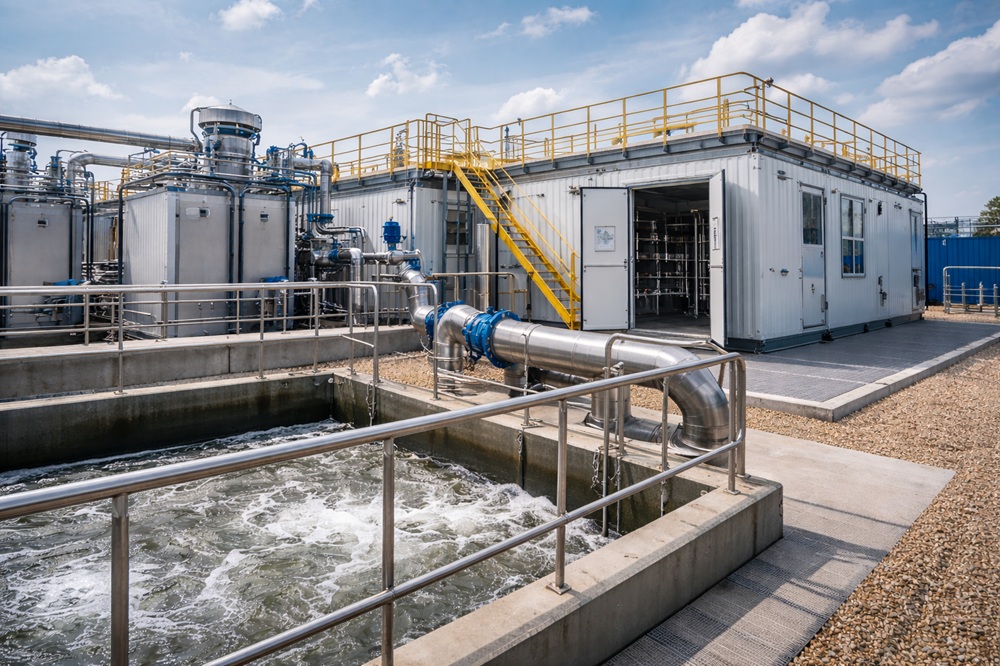
Construction sites often have limited installation space. Consequently, compact and containerized systems are highly preferred.
Automated systems improve operational efficiency and reduce manual intervention.
Additionally, real-time monitoring helps detect issues early and maintain compliance.
Construction projects may expand over time. Therefore, scalable systems provide better long-term value and operational flexibility.
RO systems help reduce dissolved salts and improve water quality.
Proper STP design and regular maintenance help eliminate odor problems and improve hygiene.
Containerized treatment plants effectively solve space limitations on construction sites.
Working with experienced water treatment specialists helps projects meet all regulatory requirements efficiently.
Efficient treatment systems help projects comply with Dubai Municipality regulations.
Water reuse significantly reduces freshwater demand across project sites.
Reusing treated water helps reduce water procurement expenses over time.
Sustainable water management improves environmental performance and supports green building initiatives.
Proper wastewater treatment maintains cleaner and healthier living conditions in labour camps and staff accommodations.
Well-designed water treatment systems help projects secure environmental approvals more efficiently.
Selecting the right provider is critical for successful project execution.
Firstly, choose companies with proven experience in local construction environments and regulations.
Secondly, ensure the provider offers customized solutions based on real project conditions.
Construction timelines are often strict. Therefore, quick deployment and responsive technical support are essential.
Reliable maintenance ensures uninterrupted system performance throughout the project lifecycle.
Explore complete water and wastewater treatment services here:
Most projects require STP plants, RO systems, dewatering treatment systems, and chemical dosing systems.
Wastewater treatment improves hygiene, supports compliance, and enables water reuse opportunities.
Yes. Treated water is widely reused for dust suppression, irrigation, and non-potable applications.
As Dubai continues expanding its infrastructure and construction sectors, water treatment has become a critical part of project planning. From labour camp wastewater management to dewatering and water reuse systems, construction projects require efficient and compliant treatment solutions.
By implementing advanced treatment technologies and partnering with experienced providers, developers can improve sustainability, reduce costs, and ensure long-term project success.
info@meftinternational.net June 24, 2026
info@meftinternational.net May 7, 2026
info@meftinternational.net April 28, 2026
info@meftinternational.net April 17, 2026
info@meftinternational.net March 24, 2026
info@meftinternational.net March 12, 2026
info@meftinternational.net February 26, 2026
info@meftinternational.net February 19, 2026 Our focus is on delivering superior value to our clients for company modification.